Natur- und Umweltpädagogik
‘Zukunftsschmiede’ (Future Forge)
The ‘Zukunftsschmiede’ is part of the nature and environmental education programme at the Mundenhof Animal and Nature Adventure Park.
It expands and complements the educational programme at the Mundenhof, focusing on nutrition, sustainable lifestyles and sustainable food production. Here, children and young people are able to gain first-hand experiences using all their senses and to experience the natural cycles linking people and nature. The children and young people are encouraged and supported to take responsibility for their actions, as the practical activities allow them to experience the consequences of their own actions first-hand.
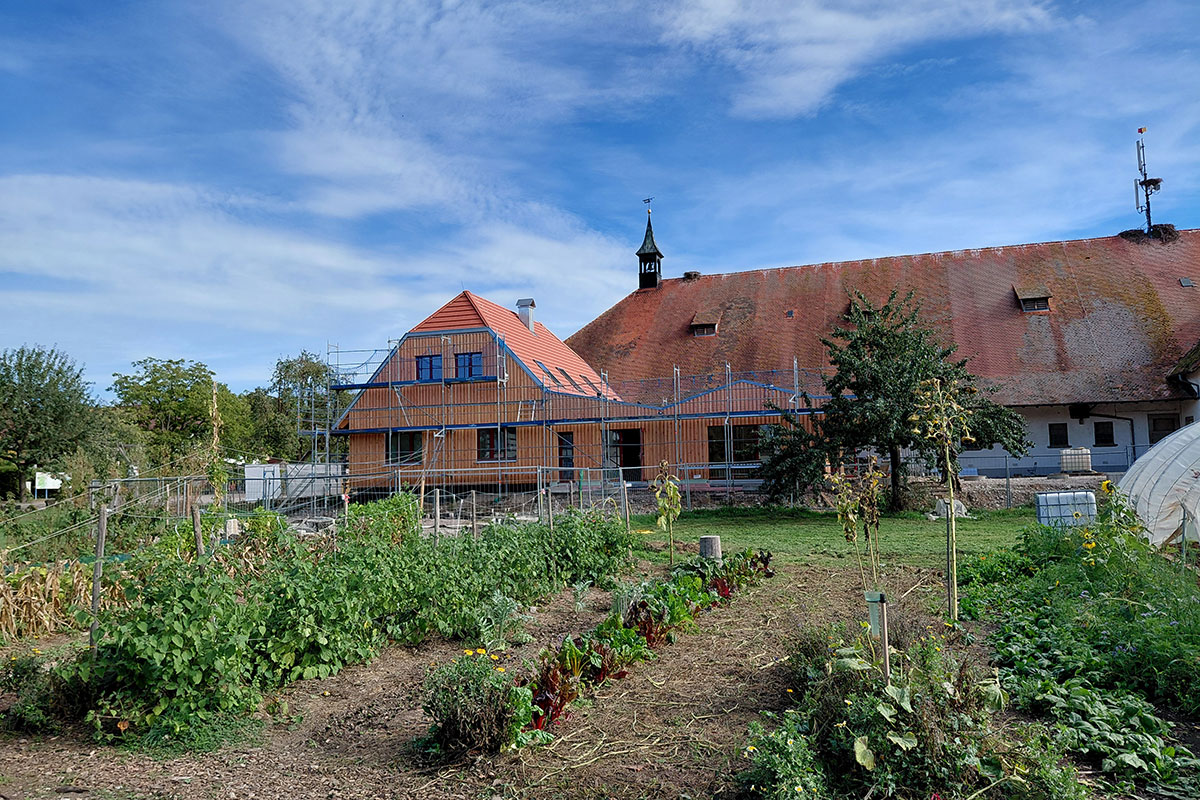
The ‘Zukunftsschmiede’ will be based in the old smithy next to the administration building, directly opposite the courtyard restaurant. To this end, the old building will be converted into a large cooking area for children and adults, with an adjoining educational workshop and a large group and dining room. Outside, a terrace will be created, featuring an outdoor kitchen and access to the ‘Zukunftsgarten’.
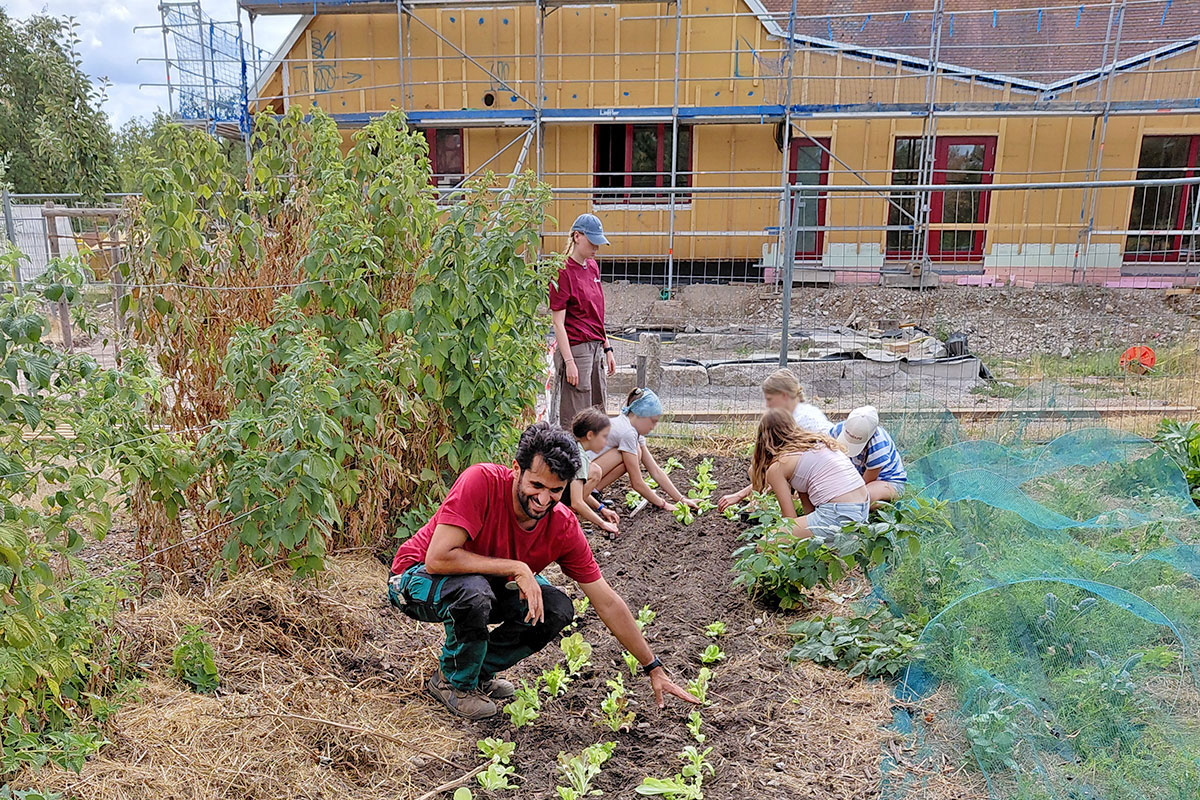
The Future Garden, as the centrepiece of the Future Forge, is developing into a space with the greatest possible biodiversity and versatile living and learning areas. Even the process of creating it is designed to be interactive, allowing a wide range of different stakeholders to get involved and gain experience. For example, the former football pitch was transformed into a diverse orchard and playground through a series of activities involving children and sponsors. Old fruit varieties were planted, picnic platforms and raised beds were built, slackline posts were erected, and the area was bordered by colourful, flowering recycled planters and dry stone walls.
Right next to it is the protected area, which features a pond, a large underground cistern, the vegetable patch with its polytunnel, and the field oasis.
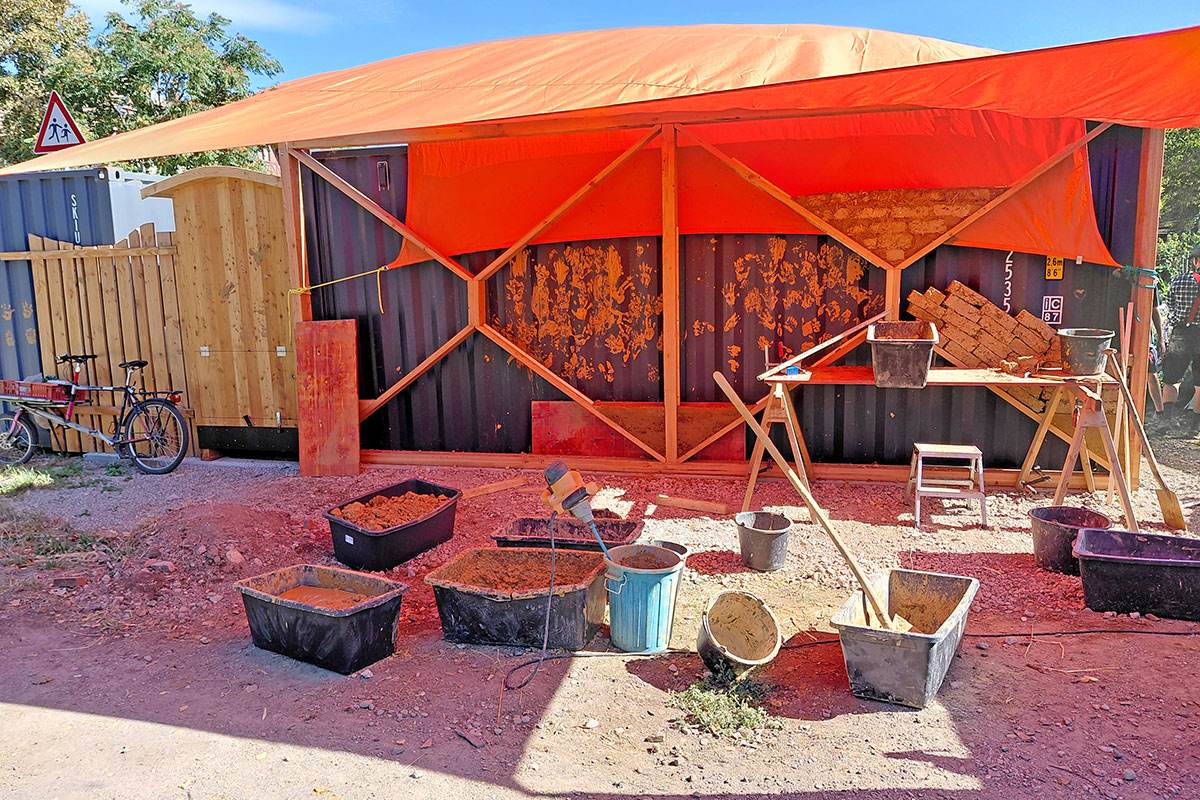
Vegetables and crops are grown in mixed cultivation on the field. Emphasis is placed on growing heirloom, open-pollinated and rare varieties in order to illustrate the diversity of our cultivated plants and to promote their conservation. The vegetables and fruit are harvested, tended and processed together with children and school classes. The ‘Ackeroase’, with its clay wall, green roof and integrated composting toilet, is an example of sustainable construction. It serves as a storage area for materials and tools, and as a break area and retreat for young and old alike.